Schedule a Consultation
We are reliable. We have been here a long time. And we will support you every step of the way.
Contact Us
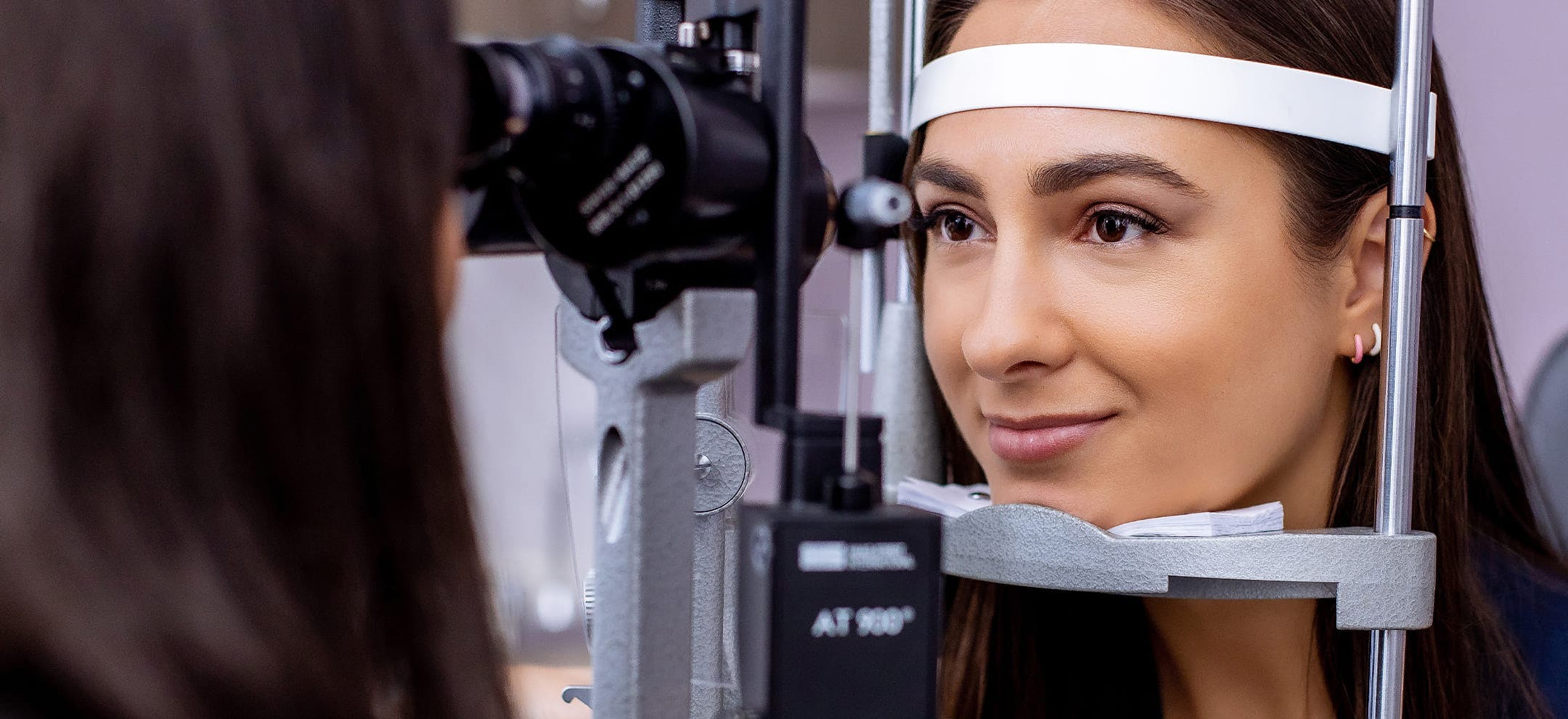
An ophthalmologist can perform eye surgery, use lasers, give injections, and treat the full range of eye diseases. In New York, an optometrist cannot do any of those things. Optometrists are trained for primary eye care, such as exams, prescriptions, and managing many common conditions. Knowing the difference helps you find the right ophthalmologist in NYC when your eyes need more than a routine checkup.
At New York Laser Vision, both types of eye doctors work side by side. Board-certified ophthalmologist Dr. Julia Giyaur has more than 15 years of experience and has performed thousands of eye microsurgeries, vision correction procedures, and eyelid surgeries. She leads a team of experienced optometrists across offices in Manhattan, Brooklyn, and Staten Island.
In this blog, Dr. Giyaur and the New York Laser Vision team explain how the two professions differ, what each one can legally do in New York, and when you should see an ophthalmologist.
The difference between an ophthalmologist and an optometrist comes down to training and legal scope. An ophthalmologist is a medical doctor (MD or DO) who specializes in the eyes. An optometrist holds a Doctor of Optometry (OD) degree and is not a medical doctor, according to the American Academy of Ophthalmology.
Here is how the two paths compare:
Both professions play an important role in protecting your sight. The key point is that only an ophthalmologist is trained and licensed to treat the eye surgically.
An ophthalmologist can do five main things that an optometrist cannot: perform eye surgery, use lasers, give injections, prescribe without the limits placed on optometrists, and treat advanced eye disease. New York's optometry law (Education Law Article 143) states that optometry does not include any injection or invasive procedure, which it defines to include surgery and lasers.
Eye surgery is the clearest difference. At New York Laser Vision, Dr. Giyaur performs cataract surgery with premium and light adjustable lens implants, LASIK, PRK, LASEK, EVO ICL, refractive lens exchange, and combined cataract and glaucoma surgery. She also performs blepharoplasty (eyelid surgery) to correct droopy eyelids that block vision.
Laser procedures are also limited to physicians in New York. Dr. Giyaur uses femtosecond laser technology for bladeless cataract surgery and laser vision correction. Lasers also treat posterior capsule opacification, a clouding that can form after cataract surgery and is corrected with a quick in-office procedure.
Injections fall outside optometry under New York law. Ophthalmologists can treat the eye and surrounding tissue with injectable medications. On the aesthetic side, Dr. Giyaur has refined techniques for non-surgical eye bag correction and liquid face-lifting using dermal fillers and Botox.
Prescribing authority is broader for ophthalmologists. New York optometrists can prescribe eye drops and, with certification, a short list of oral drugs. That list covers six antibiotics and certain antivirals and glaucoma pills, some limited to a single short prescription. Ophthalmologists, as physicians, face no such list.
Advanced eye disease often needs an ophthalmologist. For example, New York law requires optometrists who give an emergency glaucoma pill to refer the patient right away to a physician who specializes in eye disease. Ophthalmologists manage advanced glaucoma, diabetic eye disease, keratoconus, eyelid lesions, and conditions that need surgery.
Optometrists in New York diagnose and treat many eye conditions, and their role has grown in recent years. In 2021, Governor Hochul signed a law letting certified optometrists prescribe certain oral medications, according to the American Optometric Association.
The optometrists at New York Laser Vision provide a wide range of care, including:
Each optometrist on the team brings a focus area. Dr. Rachel Mindin is an expert in dry eye disease, and Dr. Selena Huang is fellowship-trained in specialty contact lenses and corneal reshaping. Dr. Sarah Pinkhasov specializes in myopia management and vision therapy, while Dr. Anastasiya Zagurskaya focuses on dry eye, glaucoma, and macular degeneration.
You should see an ophthalmologist when your eyes may need surgery, a laser procedure, an injection, or treatment for advanced disease. Common reasons to see an ophthalmologist in NYC include:
Sudden flashes of light, a burst of new floaters, or a shadow across your vision need emergency care. The Mayo Clinic notes these can signal a retinal detachment, which can cause permanent vision loss without prompt treatment. Call your eye doctor or go to the nearest emergency room right away.
Ophthalmologists and optometrists work best as a team, and that is how care is delivered at New York Laser Vision. Optometrists handle routine and ongoing care, then refer patients to Dr. Giyaur when surgery or advanced treatment is needed. After surgery, the same optometrists often help with follow-up visits, so you see familiar faces.
This co-management model is built into the practice. Dr. Zagurskaya's work includes surgical co-management, and Dr. Mindin holds RxSight Light Adjustable Lens certification for patients who receive that implant during cataract surgery. Dr. Huang's specialty lens training helps patients with irregular corneas who may not be candidates for laser vision correction.
Patients across New York City benefit from having every level of eye care under one roof. The practice has served more than 35,000 patients from its offices in Manhattan, Brooklyn, and Staten Island. Dr. Giyaur also holds operating privileges at Mount Sinai New York Eye and Ear Infirmary and Northwell North Shore University Medical Center.
Neither is better; they serve different needs. An optometrist is an excellent choice for routine exams, glasses, contacts, and managing many common conditions. An ophthalmologist is the right choice when you may need surgery, lasers, injections, or treatment for advanced disease.
Many patients can book directly with an ophthalmologist, but some insurance plans require a referral. Check with your plan before scheduling. The New York Laser Vision team can help you understand your coverage.
Yes, an optometrist can diagnose glaucoma and cataracts during an eye exam. Certified optometrists in New York can also treat glaucoma with eye drops. Cataract removal and glaucoma surgery, however, must be performed by an ophthalmologist.
No, an optometrist cannot perform LASIK in New York, because state law excludes lasers and surgery from optometry. An optometrist may evaluate your eyes and help with follow-up care, but an ophthalmologist like Dr. Giyaur performs the procedure.
Coverage depends on your plan. Routine vision exams are often covered by vision insurance, while medical eye problems and cataract surgery are usually billed to health insurance, including Medicare. LASIK is typically considered elective and not covered, though HSA and FSA funds can often be used.
Choosing between an ophthalmologist and an optometrist is easier when both are part of the same practice. At New York Laser Vision, you can start with a comprehensive exam and move to surgical care with Dr. Giyaur if you need it, without changing offices or starting over.
Dr. Giyaur is a board-certified ophthalmologist and Castle Connolly Top Doctor (2025). She is a former Chief Resident in ophthalmology and a fellow of the American Academy of Ophthalmology and the American Society of Cataract and Refractive Surgery. If you are looking for an experienced ophthalmologist in NYC, schedule a consultation at our Manhattan, Brooklyn, or Staten Island office today.
This information is provided for educational purposes only and does not replace a consultation with a board-certified ophthalmologist. Outcomes, risks, and suitability vary from patient to patient.
We are reliable. We have been here a long time. And we will support you every step of the way.
Contact Us