
Locations Give New York Laser Vision a phone call at (917) 970-9377 Book Now

Comprehensive Glaucoma Care in Manhattan

New York Laser Vision offers glaucoma care in Manhattan under the direction of Julia Giyaur, MD, a board-certified ophthalmologist and fellow of the American Academy of Ophthalmology and the American Society of Cataract and Refractive Surgery. Dr. Giyaur has performed thousands of eye surgeries over more than 15 years in practice, including procedures that address glaucoma alongside cataracts. Working alongside her is a team of optometrists, including Dr. Rachel Mindin and Dr. Sarah Pinkhasov, who monitor glaucoma patients through regular testing and help catch changes in eye pressure or optic nerve health before they progress. Patients throughout Manhattan and the surrounding boroughs turn to this team for a coordinated approach spanning diagnosis, medication management, and surgical intervention when needed.

What Is Glaucoma?

Glaucoma is a group of eye diseases that damage the optic nerve, the bundle of nerve fibers that carries visual signals from the eye to the brain. According to the American Academy of Ophthalmology, glaucoma is a leading cause of blindness in people over 60, though blindness can often be prevented with early treatment.

Key facts about how glaucoma develops:

  • Damage usually occurs when fluid builds up inside the eye and raises internal pressure
  • Some patients develop optic nerve damage even when their eye pressure measures within a normal range
  • Vision loss typically starts in the peripheral (side) vision, not the center
  • Changes can go unnoticed for years before reaching central vision
  • This gradual pattern is why glaucoma is often called the "silent thief of sight"

Because symptoms lag so far behind the damage, routine eye exams matter more than waiting to notice a problem.
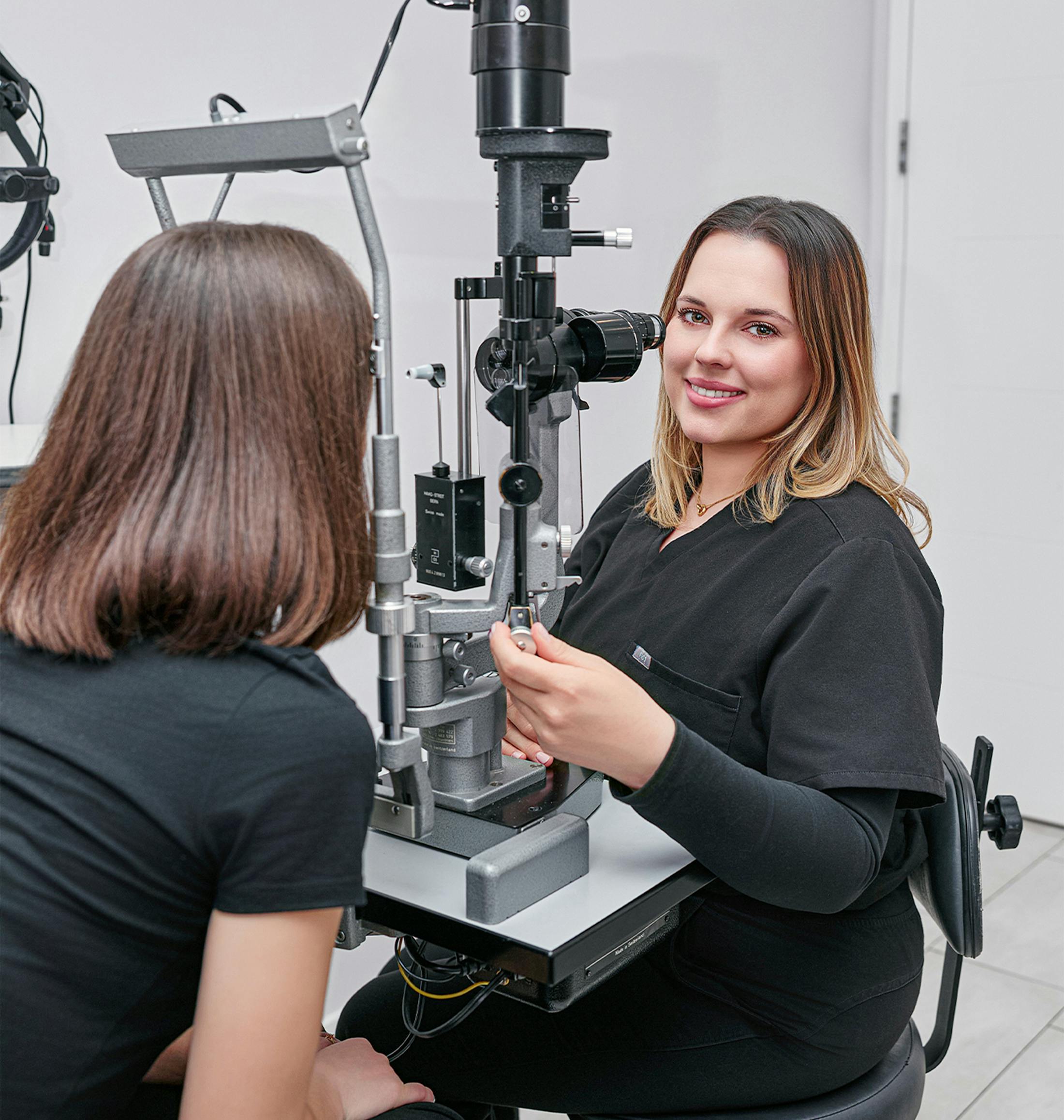

doctor examining a patient

Types of Glaucoma

  • Open-Angle Glaucoma: The most common form. The eye's drainage angle remains open, but fluid drains too slowly, allowing pressure to build gradually over months or years.
  • Angle-Closure Glaucoma: Occurs when the drainage angle becomes blocked, sometimes suddenly. A sudden attack causes eye pain, blurred vision, and nausea and requires urgent care.
  • Normal-Tension Glaucoma: Optic nerve damage and vision loss occur even though eye pressure stays within a statistically normal range, which is why imaging and visual field testing matter as much as pressure checks.

Signs and Risk Factors of Glaucoma

Early glaucoma rarely causes noticeable symptoms, which is exactly what makes it dangerous. Risk factors include:

  • Age, with risk increasing over time
  • Family history of glaucoma
  • African, Hispanic, or Asian heritage, which raises risk for specific glaucoma types
  • High eye pressure found on a routine exam
  • Thin corneas
  • Diabetes
  • Previous eye injury

Because symptoms often lag behind damage, adults should schedule a comprehensive eye exam starting around age 40, and sooner if any of these risk factors apply.

How Is Glaucoma Diagnosed?

Diagnosing glaucoma in Manhattan starts with a comprehensive eye exam that goes beyond a standard vision check. The team at New York Laser Vision uses several tests together to determine which type of glaucoma, if any, is present:

  • Tonometry to measure intraocular pressure
  • Direct examination of the optic nerve
  • Mapping of the drainage angle
  • Visual field testing to check for blind spots in peripheral vision
  • Optical coherence tomography (OCT) imaging to track subtle changes in the optic nerve fiber layer over time

Because glaucoma progresses slowly, a single test rarely tells the full story. Repeat testing over months establishes a baseline and reveals whether the disease is stable or advancing.

Banner media

Glaucoma Treatment Options in Manhattan

Treatment aims to lower eye pressure enough to stop or slow further optic nerve damage. New York Laser Vision tailors the approach to each patient's type and stage of glaucoma:

  • Prescription Eye Drops: The first-line treatment for most patients, used daily to reduce fluid production or improve drainage.
  • Laser Treatment: Procedures such as selective laser trabeculoplasty improve the eye's natural drainage and can reduce or delay the need for drops.
  • Minimally Invasive Glaucoma Surgery (MIGS): A newer category of procedures that lower eye pressure with less tissue disruption and a faster recovery than traditional glaucoma surgery.
  • Combined Cataract and Glaucoma Surgery: For patients who have both conditions, Dr. Giyaur can address the cataract and glaucoma in a single surgical visit, reducing the number of procedures a patient needs.
older man smiling

Are You a Candidate for Glaucoma Treatment?

You may be a candidate for some form of glaucoma treatment if you have:

  • Elevated eye pressure
  • Optic nerve changes
  • Visual field loss
  • "Glaucoma suspect" status, meaning early warning signs without a confirmed diagnosis

Glaucoma suspects still benefit from a treatment or monitoring plan tailored to their risk level. A comprehensive eye exam at New York Laser Vision determines which treatment path, from drops to surgery, fits a patient's specific findings.

Why Manhattan Trusts New York Laser Vision for Glaucoma Treatment

Patients choose New York Laser Vision for glaucoma treatment in Manhattan because the practice combines surgical and medical management under one roof. Dr. Giyaur holds active surgical privileges at Mount Sinai New York Eye and Ear Infirmary and Northwell North Shore University Medical Center, and she was named a Castle Connolly Top Doctor in 2025. The practice's optometrists bring additional depth to ongoing monitoring: Dr. Pinkhasov focuses on the underlying causes of vision issues rather than symptoms alone, while Dr. Mindin has worked with glaucoma patients since joining the practice in 2014. Together, the team follows patients from an initial diagnosis through years of monitoring and, if needed, surgical care, without sending them elsewhere for each stage of treatment.

What to Expect During Your Glaucoma Consultation and Treatment

A first glaucoma consultation at New York Laser Vision includes a review of medical and family history, a full eye exam, and any imaging or visual field tests needed to confirm a diagnosis. The team walks through the results, explains what type of glaucoma is present (if any), and recommends a treatment plan matched to the findings.

Most glaucoma treatment doesn't stop after one visit. Patients on eye drops typically return every few months for pressure checks, while those who've had laser or surgical treatment are monitored on a schedule set by their surgeon. Because glaucoma is a lifelong condition once diagnosed, consistent follow-up is what keeps vision stable over time.

Banner media

Protect Your Vision with New York Laser Vision

Glaucoma is manageable when it's caught and monitored consistently, and that consistency is what New York Laser Vision is built around. The practice has served more than 35,000 patients and handles over 12,000 patient visits a year, giving the team deep experience in recognizing how glaucoma progresses differently from one patient to the next. Dr. Giyaur is known for taking the time to understand each patient's occupation, daily habits, and vision goals before recommending a course of treatment, rather than defaulting to the same plan for everyone.

If you have a family history of glaucoma, a recent high-pressure reading, or simply haven't had a comprehensive eye exam in a while, don't wait for symptoms to appear. Schedule a glaucoma evaluation at New York Laser Vision's Manhattan office at 133 East 58th Street, Suite 1102, New York, NY 10022, or call 917-970-9377.

Glaucoma Treatment FAQs

Disclaimer: This information is provided for educational purposes only and does not replace a consultation with a board-certified ophthalmologist. Outcomes, risks, and suitability vary from patient to patient.

Can glaucoma be cured?

No. Glaucoma has no cure, but treatment can control eye pressure and slow or stop further optic nerve damage. Vision already lost to glaucoma cannot be restored, which is why early detection matters so much.

Is glaucoma treatment painful?

Eye drops and laser treatments are generally well-tolerated with minimal discomfort. Surgical options, including MIGS and combined cataract-glaucoma surgery, are performed under local anesthesia with a relatively quick recovery.

How often will I need eye exams after a glaucoma diagnosis?

Most patients return every three to six months, though the exact schedule depends on how stable the condition is and which treatment they're using.

What happens if glaucoma goes untreated?

Untreated glaucoma can progress from peripheral vision loss to central vision loss and, eventually, blindness. Because this damage is irreversible, ongoing treatment and monitoring are the only way to protect remaining vision.

Are there risks to glaucoma surgery?

As with any eye surgery, risks include infection, bleeding, or vision changes. Dr. Giyaur reviews the specific risks and benefits of any recommended procedure during the consultation.

For Special Events & Helpful Tips Sign Up for Our Newsletter Today

Get news from New York Laser Vision & Aesthetics in your inbox.

This field is required.
Sign Up

This site is protected by reCAPTCHA and the Google Privacy Policy(opens in a new tab) and Terms of Service(opens in a new tab) apply.

Schedule a Consultation

We are reliable. We have been here a long time. And we will support you every step of the way.

Contact Us
Contact us media
Accessibility: If you are vision-impaired or have some other impairment covered by the Americans with Disabilities Act or a similar law, and you wish to discuss potential accommodations related to using this website, please contact our Accessibility Manager at (212) 316-1200.
Trusted New York ophthalmologists delivering cutting-edge eye care with precision and compassion. NY Laser Vision specializes in advanced laser eye surgery, personalized treatment plans, and expert ophthalmologic services. Your vision, our mission.
Contact Us