
Locations Give New York Laser Vision a phone call at (718) 395-5338 Book Now

Keratoconus and Collagen-Crosslinking

Keratoconus is a degenerative eye disease responsible for blurred vision, double vision, light sensitivity, astigmatism, or near-sighted vision. It is caused by the thinning and deformation of the cornea into a cone-like shape. Keratoconus treatments in Brooklyn vary depending on the severity of the condition. Mild cases can be addressed with corrective lenses, although corrective lenses don’t address the degeneration.

Collagen cross-linking is an option for more advanced keratoconus in order to prevent the progression of the disease. Unaddressed, advanced cases may require a corneal transplant.

Causes

Keratoconus (KC) may be caused by a combination of factors. Hormone changes and environmental factors can provoke cellular degeneration. Research has shown that excessive rubbing of the eyes in childhood can also cause keratoconus later in life due to the long-term effect on corneal thickness. Genetic research has also correlated KC to several genes in human DNA, and it’s likely more are undiscovered.

Symptoms

Some patients experience worse vision in one eye, whereas others have equal symptoms in both. Vision can deteriorate very quickly once degeneration begins. Diminished vision can present as difficulty reading, having a hard time seeing at night, seeing multiples, or light distortion. Distorted vision patterns morph gradually over time. The cornea becomes misshapen as the disease progresses, and eventually, the bulging becomes noticeable to the naked eye.

Diagnosis

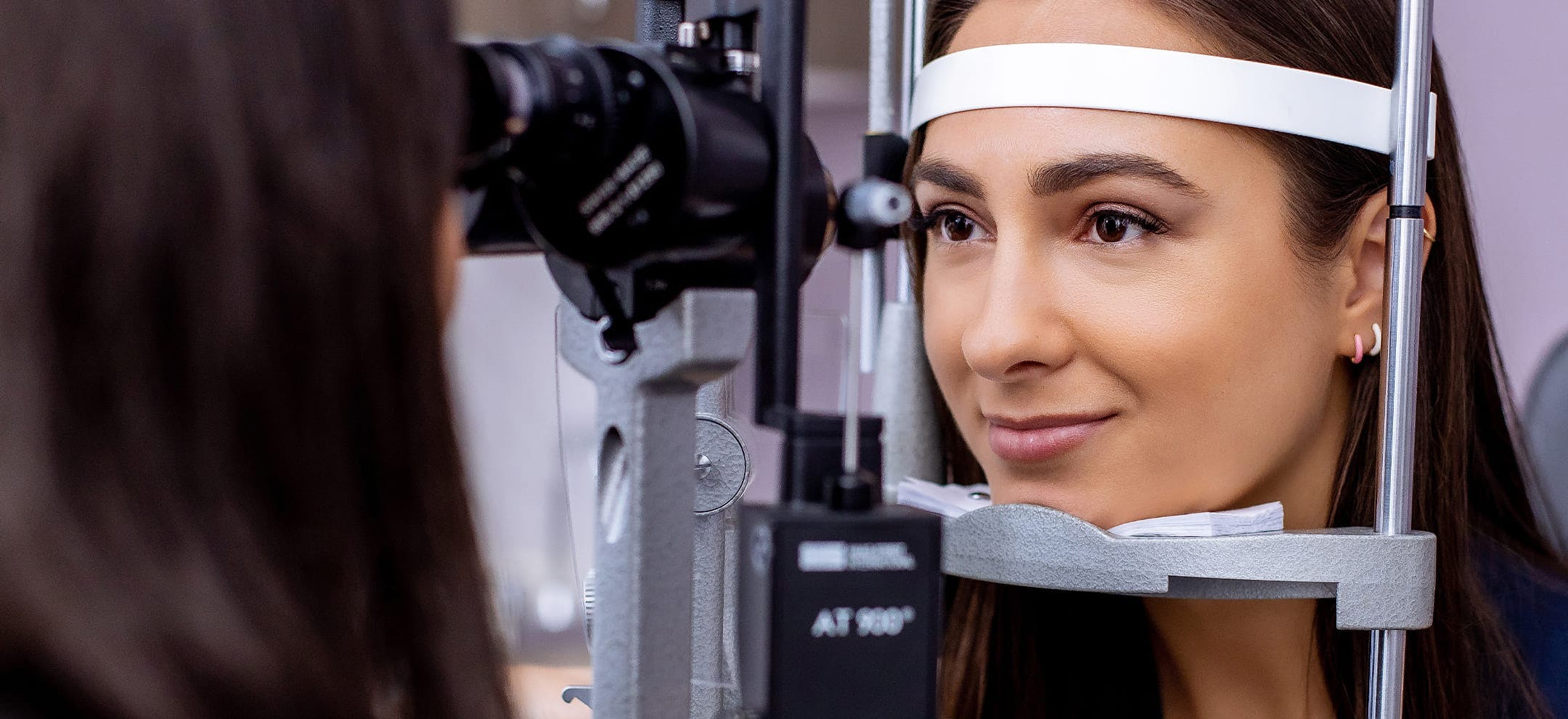
Your doctor will test your vision, take your medical history, and examine the eye with sophisticated tools. A traditional eye chart is standard for measuring your vision. Some environmental factors influence the progression of keratoconus, so your doctor will ask about related topics such as whether you rub your eyes frequently and how often you wear contact lenses. An irregular cornea can be a result of astigmatism, which is not a degenerative disease. However, if measurements show changes, it indicates deterioration has begun. A few signs of degeneration are measurable, enabling doctors to classify the condition as mild, advanced, or severe.

  • Corneal thickness – Thin spots in the cornea and changes in thickness over time.
  • Curvature – Measuring the angles of protruding corneas.
  • Cone shape – The corneal protrusion can be an elongated tip, a sagging or oval cone, or an oversized globe.
Background media
woman smiling

Keratoconus Treatments

Although keratoconus has no cure, it can be successfully managed. Early on, soft contact lenses or glasses are sufficient to correct vision. As the condition advances, the patient may be fitted for rigid gas permeable (RGP) contact lenses. Lenses correct a patient’s vision and improve the quality of life day to day, but vision correction only treats the symptoms, not the cause. The only way to halt keratoconus progression is a procedure called corneal collagen cross-linking.

Schedule a Consultation

Contact Us

What is Corneal Collagen Cross-linking?

Regenerative medicine is a class of procedures that promote self-healing, and a regenerative procedure has been approved for keratoconus treatments. Corneal collagen cross-linking fits this category because the procedure prompts the immune system to create natural fibers of collagen. Your ophthalmologist will use Vitamin B2/riboflavin drops and focus a special UV-A laser on the cornea. The laser activates the riboflavin, which stimulates collagen production.

Strands of new collagen form on the stroma, a layer of the cornea, strengthening it. This procedure is most effective on afflicted patients under the age of 35 before the keratoconus progression has reached its end. This procedure is performed here at New York Laser Vision in Brooklyn by Dr. Julia Giyaur. Although often not covered by most major insurance companies, financing is available with us.

Banner media

What is the cost of Crosslinking for Keratoconus?

Crosslinking for Keratoconus typically starts at a rate of $1500 per eye. The actual cost may vary depending on factors like the severity of the condition and specific patient requirements. It is crucial to consult with an eye care specialist for a personalized cost estimate and to discuss the potential benefits and risks associated with the Crosslinking procedure for managing Keratoconus.

close up of eye

Long-term prospects

In most cases, the degeneration and vision impairment eventually stop progressing. Keratoconus treatments vary depending on individual cases’ severity. In rare cases, corneal scarring is so severe that the appropriate keratoconus treatment is a corneal transplant. If your vision affects your quality of life or is getting progressively worse, don’t wait to schedule an exam and discover the underlying cause.

Financing Options

Banner media

For Special Events & Helpful Tips Sign Up for Our Newsletter Today

Get news from New York Laser Vision & Aesthetics in your inbox.

This field is required.
Sign Up

This site is protected by reCAPTCHA and the Google Privacy Policy(opens in a new tab) and Terms of Service(opens in a new tab) apply.

Schedule a Consultation

We are reliable. We have been here a long time. And we will support you every step of the way.

Contact Us
Contact us media
Accessibility: If you are vision-impaired or have some other impairment covered by the Americans with Disabilities Act or a similar law, and you wish to discuss potential accommodations related to using this website, please contact our Accessibility Manager at (212) 316-1200.
Trusted New York ophthalmologists delivering cutting-edge eye care with precision and compassion. NY Laser Vision specializes in advanced laser eye surgery, personalized treatment plans, and expert ophthalmologic services. Your vision, our mission.
Contact Us