If distant objects look blurry while close-up tasks remain clear, managing nearsightedness early is key to protecting your vision.

Myopia Control in Brooklyn
Table of Contents
Myopia Videos
Non-Surgical Solution for Pediatric Nearsightedness

What Exactly Is Myopia?
Sometimes commonly referred to as “nearsightedness,” myopia is a visual condition that causes an individual to be unable to see anything that isn’t close up to the face. For most, this manifests itself as the need to squint, any time something is being looked at from any kind of significant distance. The exact cause for myopia isn’t exactly known, but it is understood to be a genetic issue. During the developmental years, the eyes undergo a relatively massive amount of growth. In some individuals, this growth can cause the eye to actually grow in a way that results in too much distance between the front and back of the eyeball. This lengthened shape causes difficulty in the vision, distorting it and making objects difficult to see when they’re not up close.
Some of The Most Common Indicators of Early Myopia Include:
- Headaches from straining to see
- Persistently blurred vision
- Ineffective glasses or contact lenses
- The need to squint frequently
- The inability to see things that aren’t close
Certain mild cases of myopia might not actually require that any corrective measure be taken. More severe cases, on the other hand, might require a solution like corrective lenses, or LASIK eye surgery to fully restore the vision.
Myopia Control FAQ
What myopia control treatments are available?
Common myopia control options include orthokeratology (Ortho-K) overnight lenses, daily soft multifocal contact lenses such as MiSight, and low-dose atropine eye drops. According to the American Academy of Ophthalmology, these are the main approaches to slowing myopia, and MiSight is currently the only FDA-approved contact lens for myopia control. The American Academy of Optometry (AAO) notes that atropine is often prescribed off-label for myopia and must be prepared by a compounding pharmacy. Clinical trial results for atropine have shown mixed outcomes; however, experts still regard low-dose atropine as a reasonable treatment option. Dr. Selena Huang has completed fellowship training in corneal reshaping therapy, while Dr. Rachel Mindin is certified in both Paragon CRT Ortho-K and CooperVision MiSight.
At what age should myopia control start?
Myopia control works best when it starts soon after nearsightedness is diagnosed. An AAO Ophthalmic Technology Assessment found Ortho-K had a greater effect in children younger than nine. MiSight contact lenses are FDA-approved for children ages 8 to 12 at the time treatment begins. Regular pediatric eye exams help catch myopia early.
Why does slowing myopia progression matter?
Slowing myopia protects long-term eye health, not just a child's prescription. Children who progress to high myopia face a 50% greater risk of glaucoma, six times the risk of retinal tears and detachment, and a higher likelihood of needing cataract surgery. Even modest slowing during childhood can meaningfully lower a person's lifetime risk.
Does time spent outdoors and screen time affect myopia?
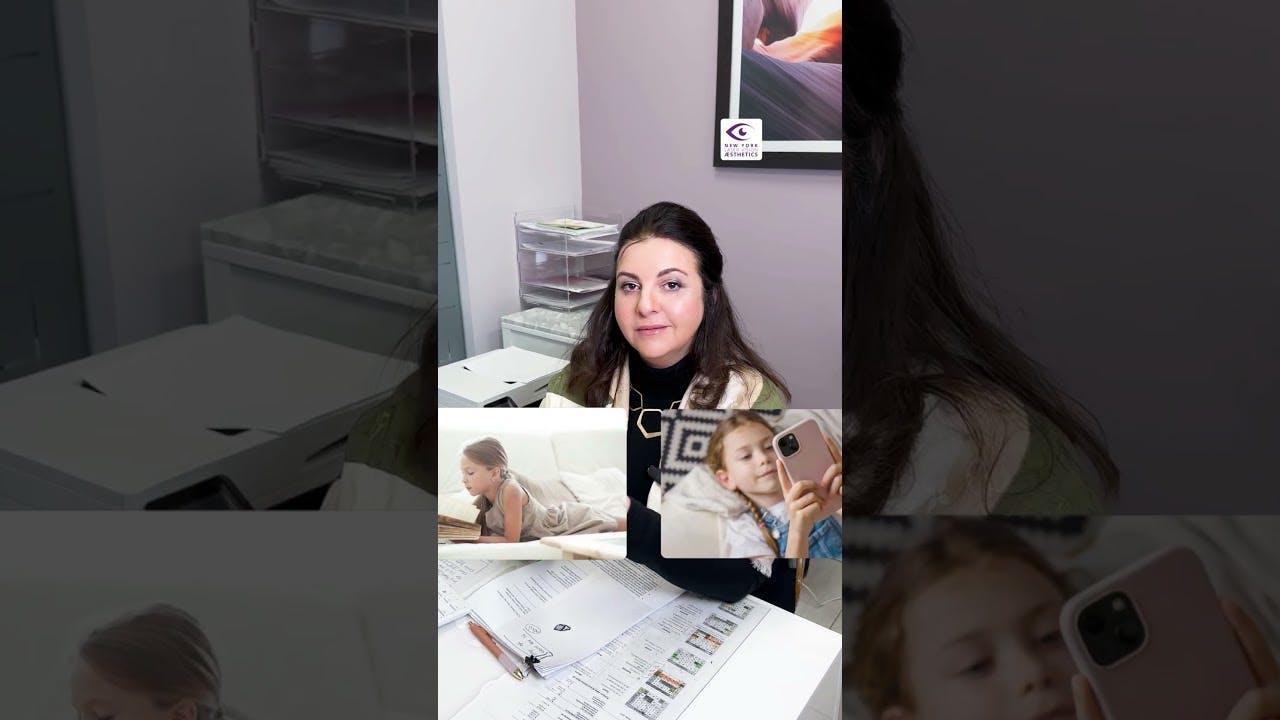
Yes, both appear to play a role. In an AAO-cited school program in Taiwan, 11 hours of outdoor time per week slowed myopia progression. The American Association for Pediatric Ophthalmology and Strabismus recommends at least one hour outdoors daily and keeping screens at least 12 inches away.
Will regular glasses make my child's myopia worse?
No, this is a common myth. Glasses and contact lenses simply bend light so it focuses on the retina, and distance vision becomes clear, according to the American Association for Pediatric Ophthalmology and Strabismus. Some parents hope that weaker-than-needed glasses will slow myopia, but research does not support this. A randomized trial published in Clinical & Experimental Optometry concluded that undercorrection does not slow myopia progression. The same paper noted that an earlier trial had found that undercorrection actually sped up progression. Specialized myopia control treatments can be used alongside standard glasses or in place of them.
How is myopia progression monitored?
Myopia happens when the eye grows too long from front to back. Because of that, eye doctors track both prescription changes and axial length, the eye's front-to-back measurement. In the FDA-reviewed MiSight trial, children wearing the lens showed less axial length growth at each annual checkup. Your child's eye doctor will schedule regular measurements to confirm treatment is working.
Is orthokeratology safe for children?
Ortho-K is considered a reasonable option for children, but lens care matters. An American Academy of Optometry expert panel noted that overnight Ortho-K lenses may raise the risk of eye infection in children, and that poor lens care is a major risk factor. Parents usually help younger children with lens care. Your provider will teach both of you proper handling and schedule regular check-ins.
How long does a child need myopia control treatment?
Most children continue treatment until their myopia naturally stabilizes. The American Association for Pediatric Ophthalmology and Strabismus notes that myopia usually continues to worsen through the teenage years and sometimes into the early 20s before it stops. Your eye doctor will recommend when to taper or stop treatment based on your child's measurements.
Can myopia control reverse nearsightedness?
Myopia control slows progression but does not reverse existing nearsightedness. The AAO's EyeNet explains that Ortho-K lenses reshape the central cornea while they sleep, allowing many children to see clearly during the day without glasses. The effect is temporary and depends on regular lens wear.
Can adults benefit from myopia control?
For most adults, myopia has already stabilized, so treatment focuses on correction rather than control. According to the American Association for Pediatric Ophthalmology and Strabismus, progression usually stops by the early 20s. The AAO's EyeNet notes that Ortho-K lenses are FDA-approved to correct myopia, typically in adults. Adults at New York Laser Vision in Brooklyn may consider Ortho-K or permanent options such as LASIK, PRK, or EVO ICL.