LASEK is considered to be a sister procedure to LASIK. They are both acronyms:
- LASEK = Laser-Assisted Subepithelial Keratomileusis
- LASIK = Laser-Assisted In-Situ Keratomileusis
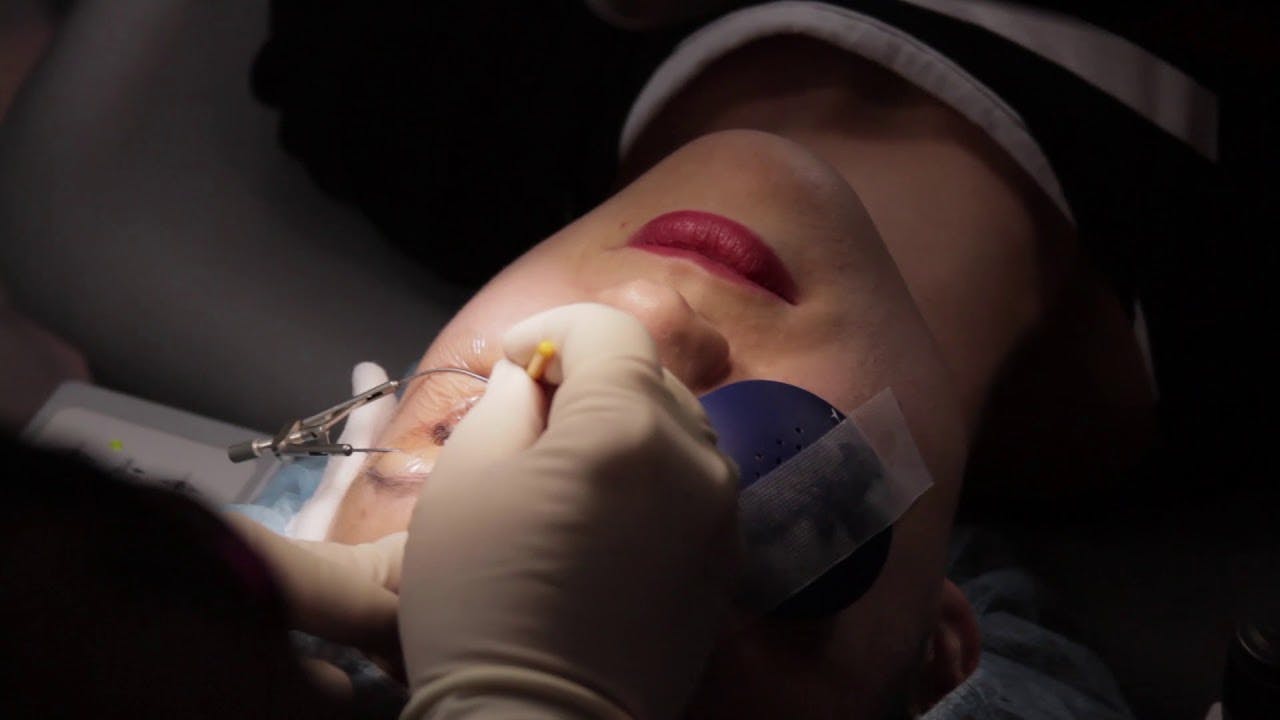
The first difference between the two is how we reach the mid-layer of the cornea, the stroma, for reshaping with the laser. In LASEK, we push the epithelium off to the side of the cornea, but it remains attached. (This is the difference between LASEK and PRK, where the epithelium is removed and regrows during recovery.) Now we use the excimer laser to reshape the stroma. When this is complete, we replace the epithelium back over the cornea. A special contact lens is then placed on the eye and is worn for three to four days for added protection.
In LASIK, we gain access to the cornea is a different way. First, we use a femtosecond laser to create a corneal flap. The flap is lifted to gain access to the cornea and it is reshaped. Then the flap is placed back down and the procedure is complete.
Recovery is different between LASEK and LASIK. A LASEK patient recovers his or her functional vision one to two weeks after their surgery. There can also be more discomfort with LASEK, so patients use steroid eye drops for several weeks after their procedure. LASIK patients recover faster, regaining functional vision within 48 hours of their surgery. Discomfort only lasts a few hours, and steroid eye drops are used for the first week after surgery.
Otherwise, the end result of vastly improved vision is the same with both LASEK and LASIK.